Available for remote roles · Lagos (WAT)

I design complex tools
people use under pressure —
ICU floors, crisis apps, trading screens.

I'm Harrison. I work on high-density, high-stakes interfaces — the kind where a confused user isn't an inconvenience, it's a failure. Research first, systems second, pixels third. Documented failures included, because that's where the real thinking shows.

6
End-to-end case studies
4
Design systems · token architecture
184
DS components · Stride
19
Hi-fi screens shipped to prototype
Selected Work · 06 Case Studies

Six hard problems.
Designed end-to-end.

Concept and unsolicited-redesign projects, taken end-to-end: problem framing, information architecture, full design systems, and high-fidelity prototypes. These are design exercises, not shipped products. None has been validated with users — each case study states the reasoning behind the decisions and what I would want to test first.

01 / 06
Healthcare B2B SaaS Desktop Concept · Simulated Client

MedTrack — ICU Command Center

Bed-status update in 2 taps — count it yourself in the prototype

A role-aware, real-time command center designed to replace the ICU whiteboard-and-spreadsheet workflow. Built for critical care environments where a 3-second delay costs lives. Each role — charge nurse, bedside nurse, physician — sees only what they need.

Analyze Case Study →
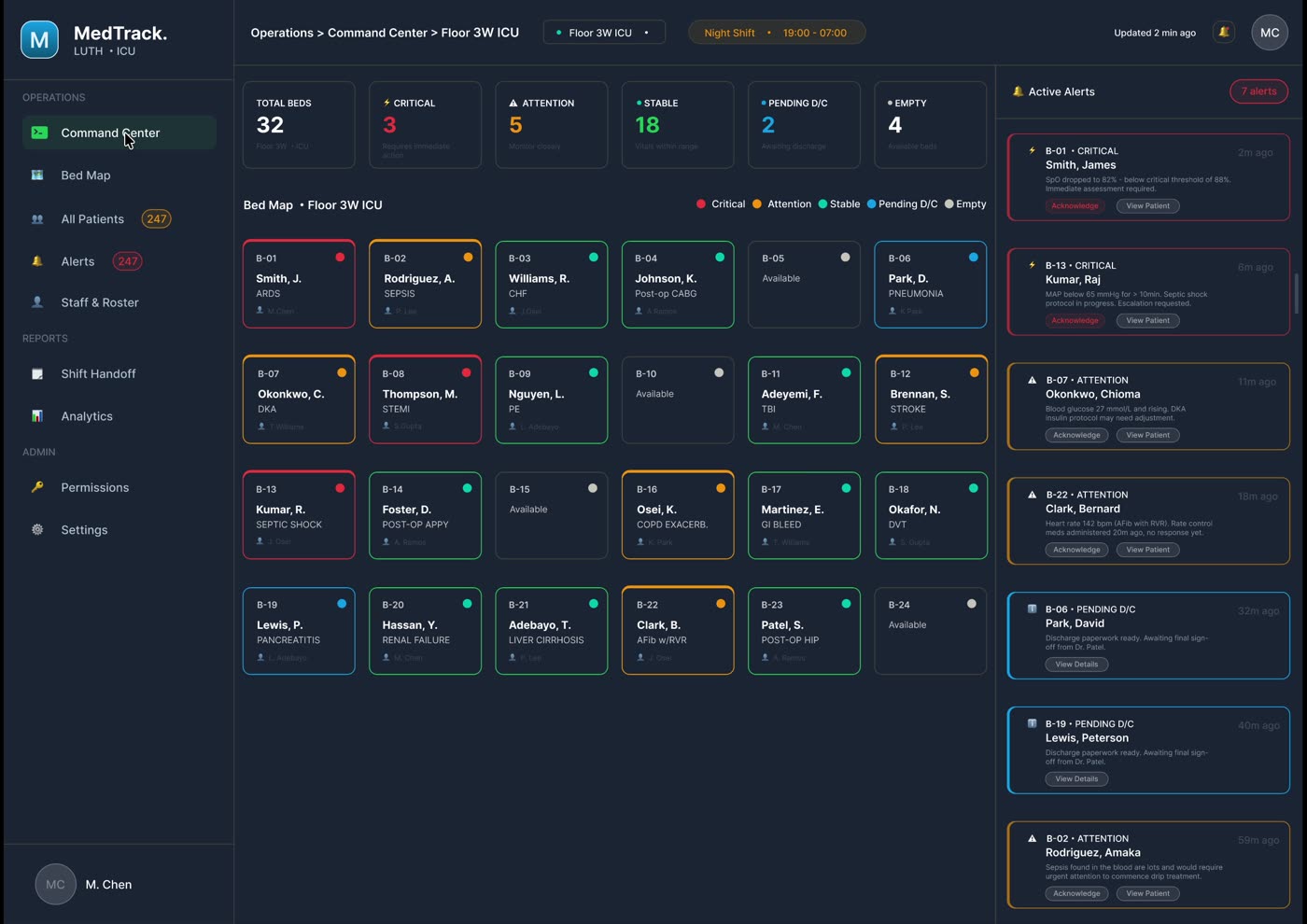
MedTrack ICU command center — live bed map with triage color coding and alert feed
MedTrack v2
02 / 06
Mental Health Consumer Mobile iOS · Android AI

MindBridge — AI Mental Health Companion

Mood check-in first — no account required to get value

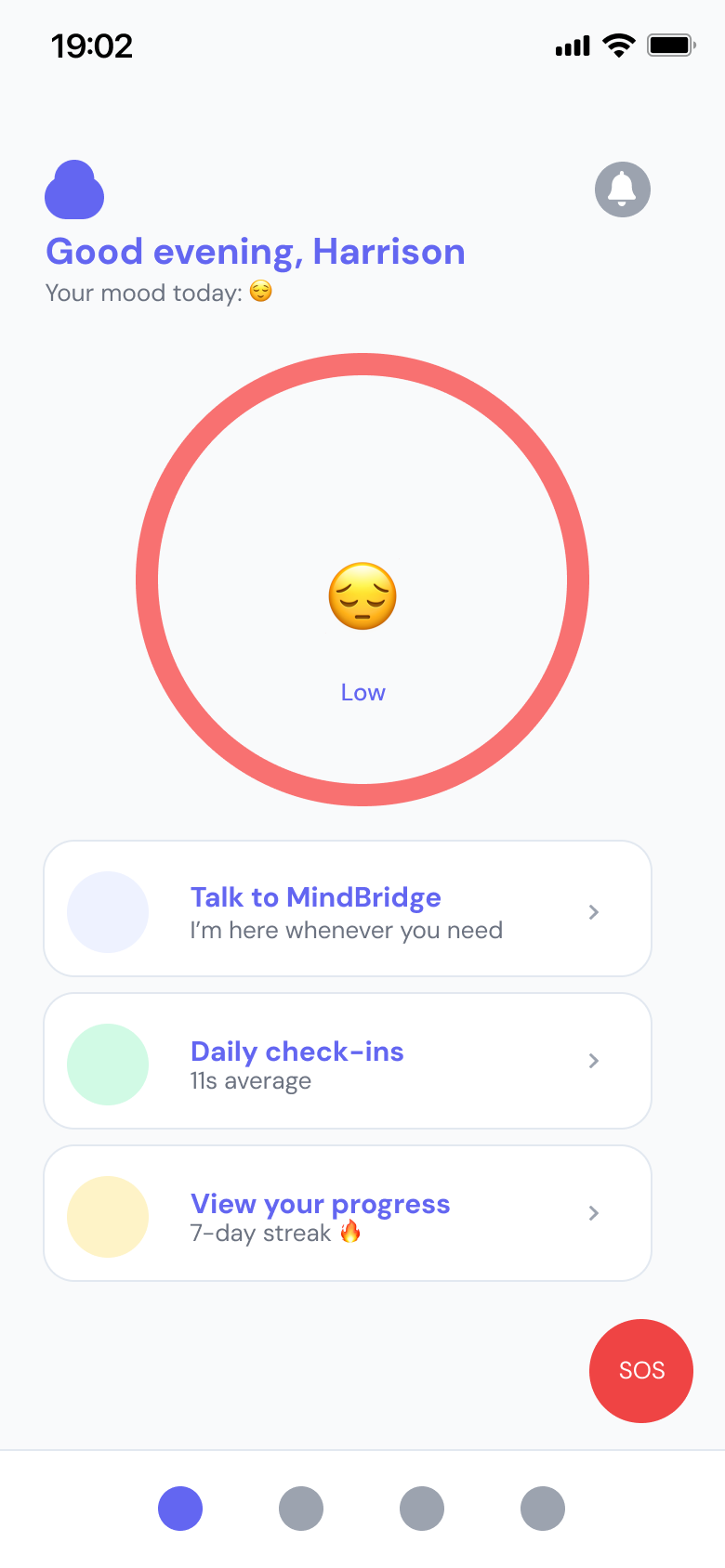
Closing the gap between Gen Z's worst moment and their first step toward help. V1 gated value behind account creation; V2 opens with a mood check-in and asks for nothing up front. 14 screens, fully linked prototype, crisis flow reachable in one tap from anywhere.

Analyze Case Study →
MindBridge home screen — mood ring, daily check-in and persistent SOS button
MindBridge v1
03 / 06
Design System Component Library Token Architecture WCAG AA

Stride — Token-Based Design System

184 components · every token pair contrast-checked to WCAG AA

A 3-tier token cascade — Primitive → Semantic → Component — designed so no component ever references a raw hex value. Dark mode is a collection swap. Brand theming overrides primitives only. 42 + 96 + 184 tokens, every layer inspectable in the file.

Analyze Case Study →
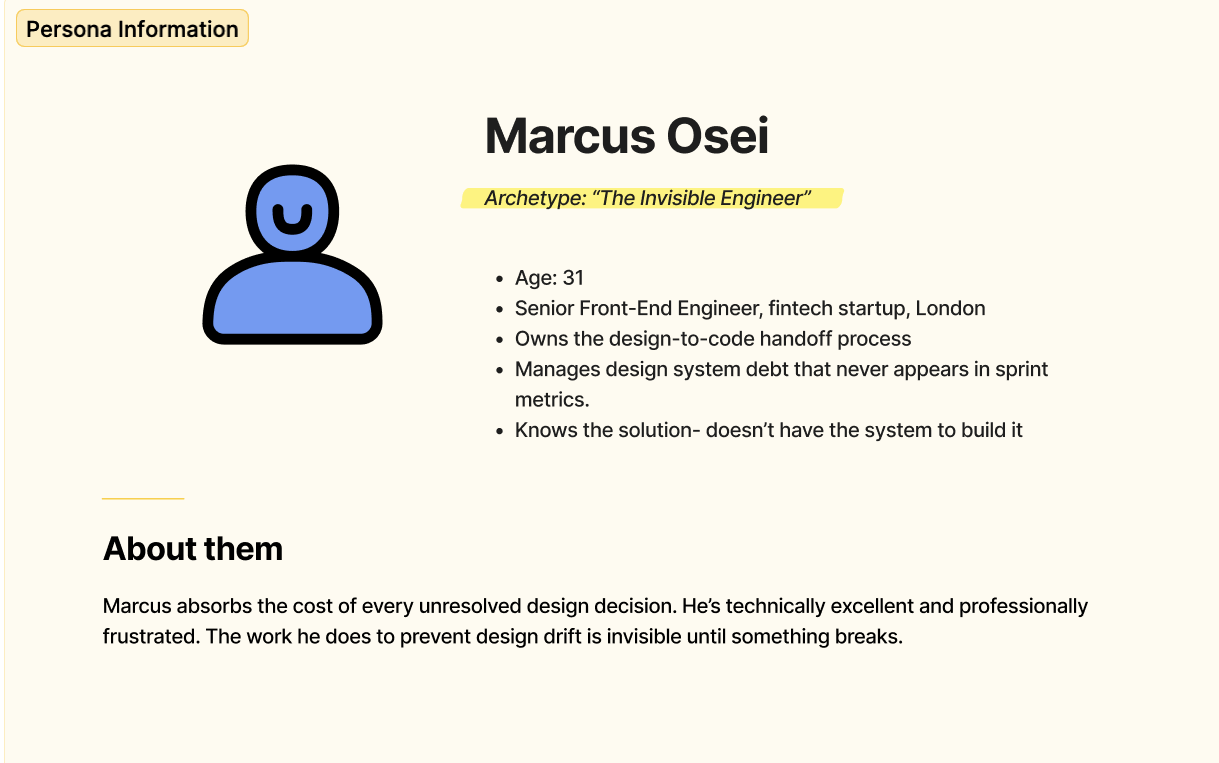
Stride discovery research — Marcus Osei, front-end engineer persona
Discovery artifact
04 / 06
Fintech Consumer Mobile Trading Unsolicited Redesign

Robinhood — Portfolio Performance Redesign

Chart cut from the entry screen — trade action above the fold

Redesigned the portfolio and trading flows to surface market intelligence at the moment of decision. Simplified complex financial data into scannable, action-oriented layouts built for both first-time and experienced investors without dumbing either experience down.

Analyze Case Study →
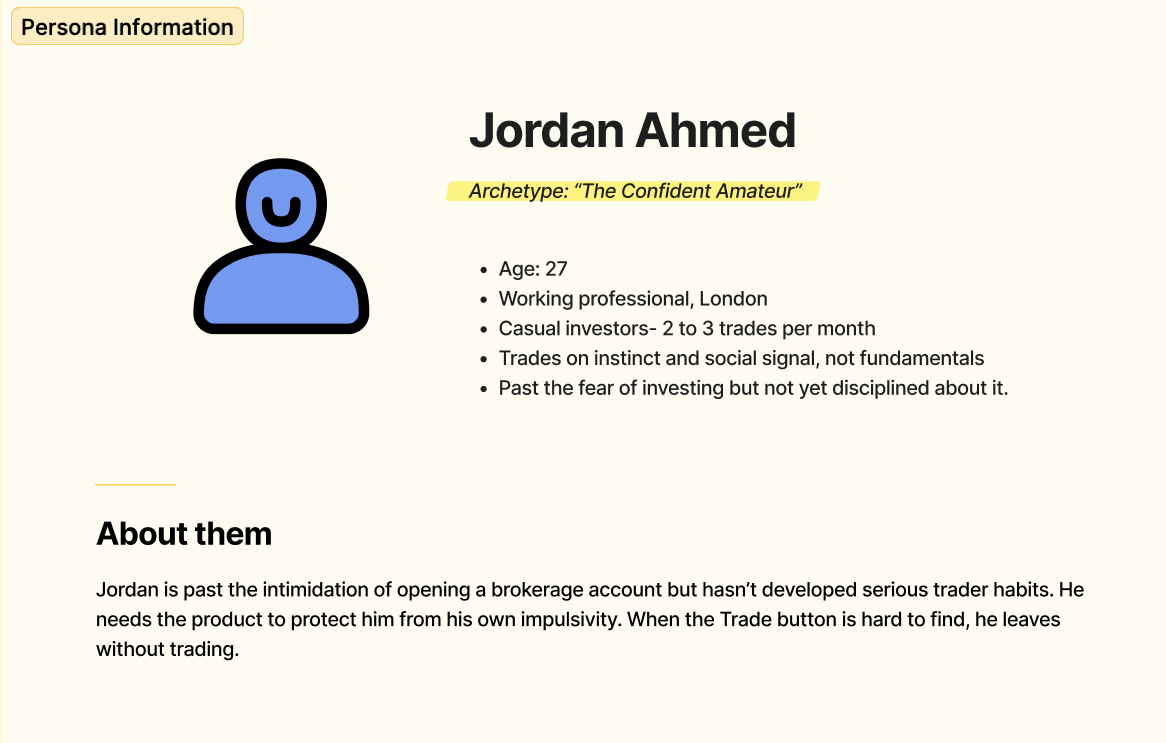
Robinhood discovery research — Jordan Ahmed, retail investor persona
Discovery artifact
05 / 06
Enterprise Workflow SaaS Decision Management Concept · Simulated Client

Arbiter — Workflow Decision Engine

Non-reorderable queue — priority set by composite score, not by the reviewer

Redesigned the core decision workflow for operations teams processing high-volume, time-sensitive approvals. Built a structured triage system that surfaces the right information at each decision gate — reducing cognitive load and eliminating the approval bottlenecks that stalled entire pipelines.

Analyze Case Study →
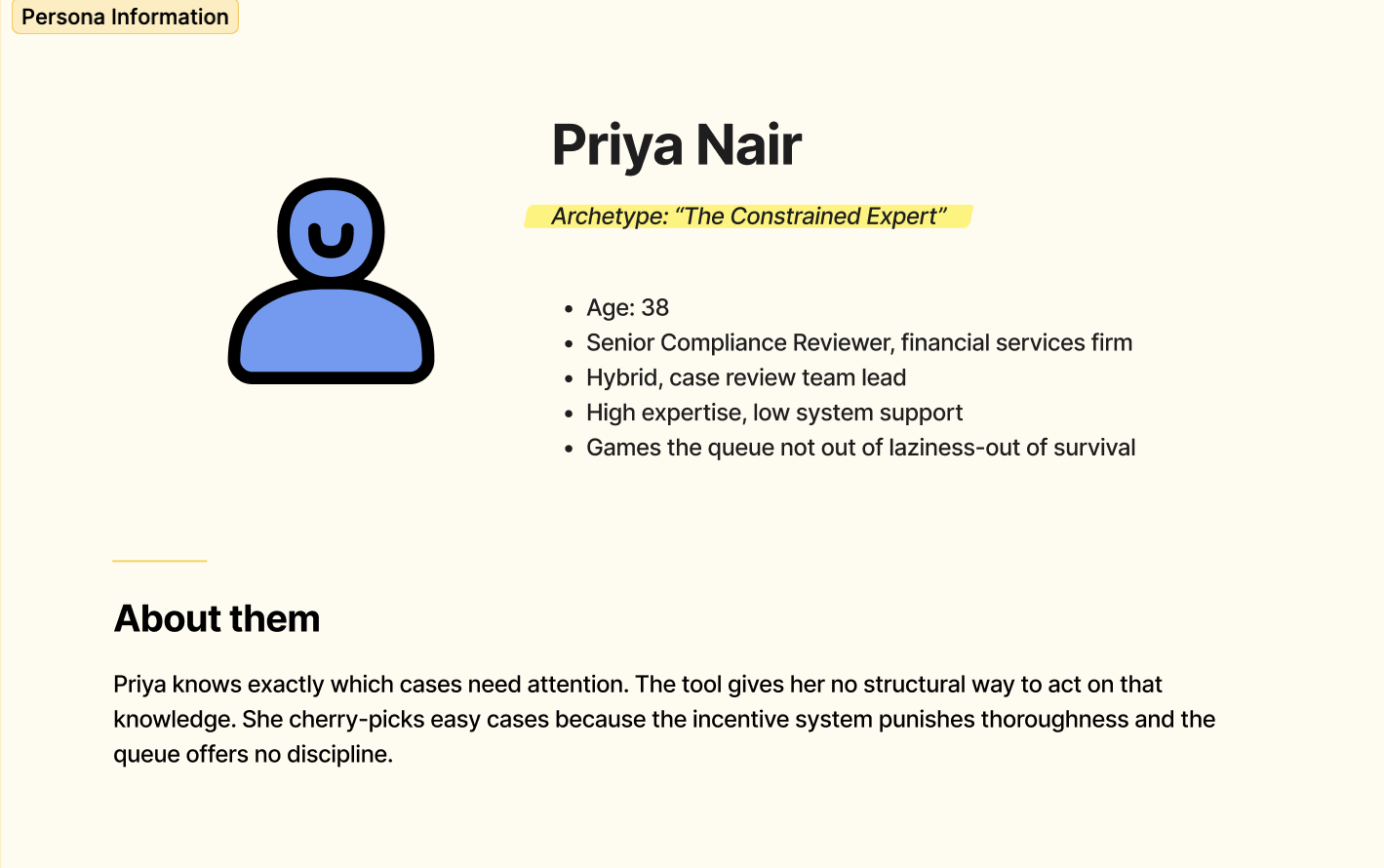
Arbiter discovery research — Priya Nair, compliance reviewer persona
Discovery artifact
06 / 06
Civic Tech Government Web App Unsolicited Redesign

FAFSA — Federal Aid Application Redesign

Guidance appears on field focus — no tooltip to go hunting for

Redesigned the federal student financial aid application to eliminate the anxiety and confusion that causes millions of eligible students to abandon the process mid-way. Stripped bureaucratic language, introduced a progress-aware layout, and designed specifically for first-generation college applicants.

Analyze Case Study →
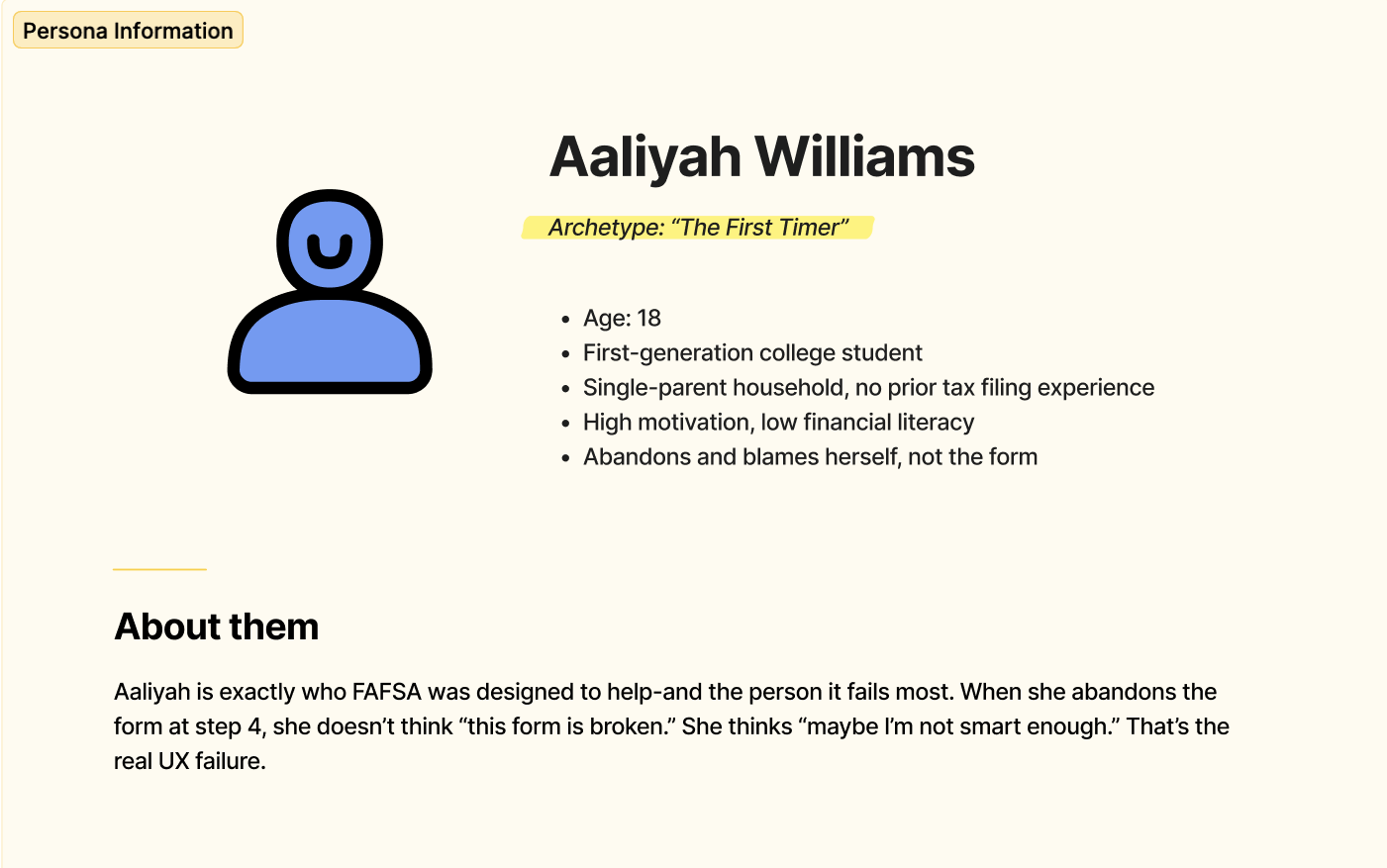
FAFSA discovery research — Aaliyah Williams, first-generation applicant persona
Discovery artifact
My Design Process

Human judgment. AI acceleration. Product-first decisions.

I use AI to accelerate exploration — not replace product thinking. Every recommendation is challenged through research, usability principles, business goals, accessibility standards, and engineering feasibility before it becomes part of a final solution.

01
Understand

Problem framing, product goals, competitive teardown, constraint mapping.

02
Pressure-test with AI

I use Claude as my red team — interrogating my flows before users do. On MindBridge it surfaced 3 crisis-flow gaps I hadn't designed for. All 3 became designed screens in the final flow. The synthesis and the UI are mine; AI attacks my logic.

03
Validate

Challenge every recommendation using UX heuristics, accessibility standards, research findings, and technical constraints.

04
Ship

Deliver production-ready designs with design systems, developer handoff, documentation, and QA.

Iteration · What Didn't Work

Every project has a
failed version. Here's each one.

These are concept projects, not shipped products, and none of the versions below was tested with users. What changed between V1 and V2 came from reasoning about the problem. Validating that reasoning with real people is the part I haven't done yet — and the part I most want to learn to do properly.

What Didn't Work · MedTrack

Version One

The first MedTrack layout followed conventional enterprise pattern: a dense data table as the primary view, bed map tucked away as a secondary tab. Building it out, the flaw became obvious: updating one bed took four to five interactions, and a table communicates data, not urgency.

A charge nurse thinks in beds and bays, not rows and columns. The data model was never the mental model.

What Changed

  • Made the bed map the primary view, not a tab
  • Moved KPIs to a strip that never scrolls away
  • Cut status updates from 4–5 clicks to 2
  • Rebuilt around the nurse's spatial mental model, not the data model

Result

4–5 clicks → 2 clicks

Interaction path to update a bed's status, V1 vs V2 — open the prototype and count it yourself. This is a property of the design, not a test result: neither version has been put in front of a nurse.

The click-path delta is verifiable in the open Figma file.

Read the full case study →
Design Files · Open Directly in Figma

Process open
by default.

FigJam discovery boards for all six projects — raw, unpolished, exactly as I worked. High-fidelity design files are live for MedTrack and MindBridge; the remaining four are complete and will be published here shortly.

Healthcare · B2B SaaS
MedTrack
Mental Health · Consumer Mobile
MindBridge
Design System · Component Library
Stride DS
Fintech · Consumer Mobile
Robinhood
Enterprise · Workflow SaaS
Arbiter
Civic Tech · Government
FAFSA
About

I build products that don't need a manual.

I'm Harrison Adili, a product designer working at the intersection of systems thinking and human behavior. I've designed for ICU nurses, Gen Z users in crisis, financial traders, government applicants, and enterprise operations teams — each context requiring a completely different cognitive model.

The way I work is problem first, architecture second, pixels third. I map flows in FigJam before I open Figma, and I build the token layer before I build a screen. Where I'm still growing is validation — these are concept projects, and I have not yet run structured usability testing on my own work. Learning to do that properly is the next thing I want from a role.

Right now: interning at EVU (remote) · building Agri-verse · finished NYSC at Mitiget
Let's talk →
Harrison Adili
6
End-to-end case studies
11wk
Average project timeline, research to handoff
184
Components in the Stride design system
3
Platforms: Mobile, Desktop, System
Experience

Nearly 3 years across
front-end & product design.

I started in code — building client sites by hand — then moved deliberately into product design. That's why my Figma files are structured the way engineers wish they always were.

EVU (Startup) · New York, NY — Remote
Product Design Intern
July 2025 – Present
  • Designed mobile and desktop interfaces to spec, simplifying user flows to reduce task-completion friction on the flows I reworked.
  • Restructured multi-step flows into clearer journeys to improve navigation and reduce user drop-off.
  • Ran iterative usability reviews and applied design heuristics to sharpen interaction logic across touchpoints.
Agri-verse (My Startup) · Lagos, NIG
Founding Product Designer
2025
  • Defined the product vision and design system from scratch — wireframing and high-fidelity prototyping in Figma.
  • Translated business goals and investor messaging into concrete product and UI decisions.
  • Maintained design-to-development handoff quality for a solo build, from Figma spec through implementation.
Mitiget (NYSC) Placement · Ikeja, NIG
Product Designer
May 2025 – April 2026
  • Led design across the full lifecycle, from discovery to delivery, across Web and mobile breakpoints.
  • Restructured the compliance dashboard IA so auditors could reach any control's evidence trail without leaving the control — the multi-step workflows were previously spread across separate screens.
  • Partnered with engineers for accurate implementation, cutting design-to-dev revision cycles.
  • Applied WCAG 2.1 AA accessibility standards across all design components.
Freelance · Lagos, NIG
Designer & Front-End Developer
2023 – 2024
  • Delivered 10+ client projects, including landing pages, marketing assets (Figma) and responsive websites built in HTML, CSS and JavaScript.
  • Self-managed full project cycles, from brief to live deployment, for SME clients.
  • Built front-end fundamentals while intentionally transitioning focus towards product design and UX.
Contact

Ready to build something
that actually works?

Available for full-time remote roles and select contract projects.
I read every email myself — you'll usually hear back within 24 hours, Lagos time.

adilisomto2022@gmail.com →